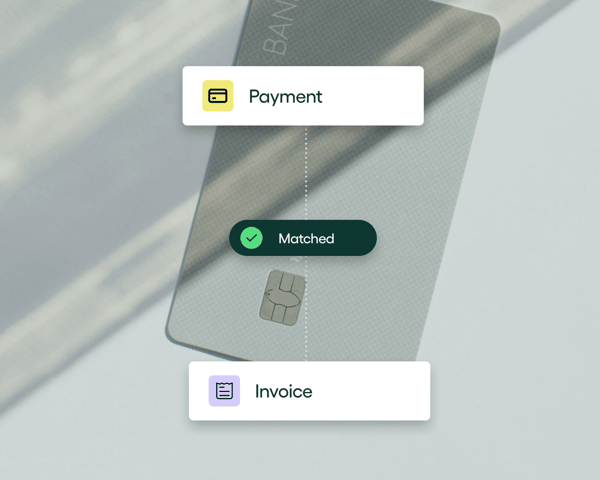
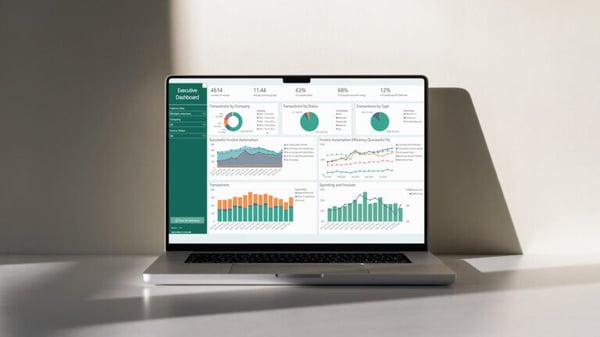

When accounts reconcile perfectly and every invoice lands where it belongs… well, that’s like ASMR for the finance brain. You feel in control.
But as invoice volumes grow, even the most organized teams can fall to chaos.
Spreadsheets multiply and email threads tangle. Suddenly, your carefully curated structure turns into clutter. And you can’t easily find the information you need when you need it.
The right invoice management solution can help you bring that order back (or introduce it for the first time).
These systems are designed to capture and store invoice data in a database. Everything is organized and searchable in one place when you need it.
In this guide, we list the best invoice management solutions. We’ll look at the features they offer and who they’re built for, so you can choose the platform that best meets your team’s needs.
- Rillion – A fast and flexible AI-powered invoice management solution
- Xero – Automated invoicing software for small businesses
- BILL – Invoice automation software featuring seamless integrations
- Basware – Intelligent invoice lifecycle management with global compliance
- Tipalti – Accounts payable automation for global payments
- Coupa – Cloud invoicing management software with e-invoicing capabilities
- Sage Intacct – Intelligent invoice automation for modern finance teams
- Concur Invoice – Enterprise-grade invoice management software
8 best invoice management solutions at a glance
Here’s a look at the best invoice management software, including who they’re designed for and their standout features:
| Invoice management solution | Best for |
Standout feature |
|
1. Rillion – Fast AI-powered invoice management from capture to payment |
|
Multi-entity management with AI-powered automation that predicts approvers, codes invoices with ~90% accuracy, and runs 3-way PO matching automatically to cut approval times and prevent errors. |
| 2. Xero – Automated invoicing software for small businesses |
|
Bank feed integrations speed up reconciliation and reduce manual data entry. |
| 3. BILL – Invoice automation software featuring seamless integrations |
|
An extensive vendor network that facilitates payments and reduces fraud. |
| 4. Basware – Intelligent invoice lifecycle management with global compliance |
|
E-invoicing network that facilitates communication with suppliers and eliminates paper invoices. |
| 5. Tipalti – Accounts payable automation for global payments |
|
Global payments to 200+ countries and territories in 120 currencies. |
| 6. Coupa – Cloud invoicing management software with e-invoicing capabilities |
|
Users can tap into “community intelligence” and benchmark performance against industry peers. |
| 7. Sage Intacct – Intelligent invoice automation for modern finance teams |
|
Project costing enables companies to place smarter project bids based on historical data. |
| 8. Concur Invoice – Enterprise-grade invoice management software |
|
Unified spend management provides full visibility of spend management in a single platform. |
Here’s a full breakdown of the best invoice management software, starting with our top pick.
1. Rillion – A fast, AI-powered invoice management solution

Rillion is an invoice management solution that automates every step, from capture and coding to approval and payment. With AI-driven workflows and three-way matching, invoices move through the process quickly and accurately, giving finance teams full visibility and control.
Rillion captures invoice data automatically using AI, recognizing vendors, amounts, and account codes with precision. The LLM-based capture matches captured details with your master data, so there's no need for cross-checking between systems or maintaining OCR templates. The system learns from every action, so recurring invoices code and route themselves over time. A centralized dashboard provides finance leaders with real-time visibility into all spending, so they can identify bottlenecks and forecast with confidence.
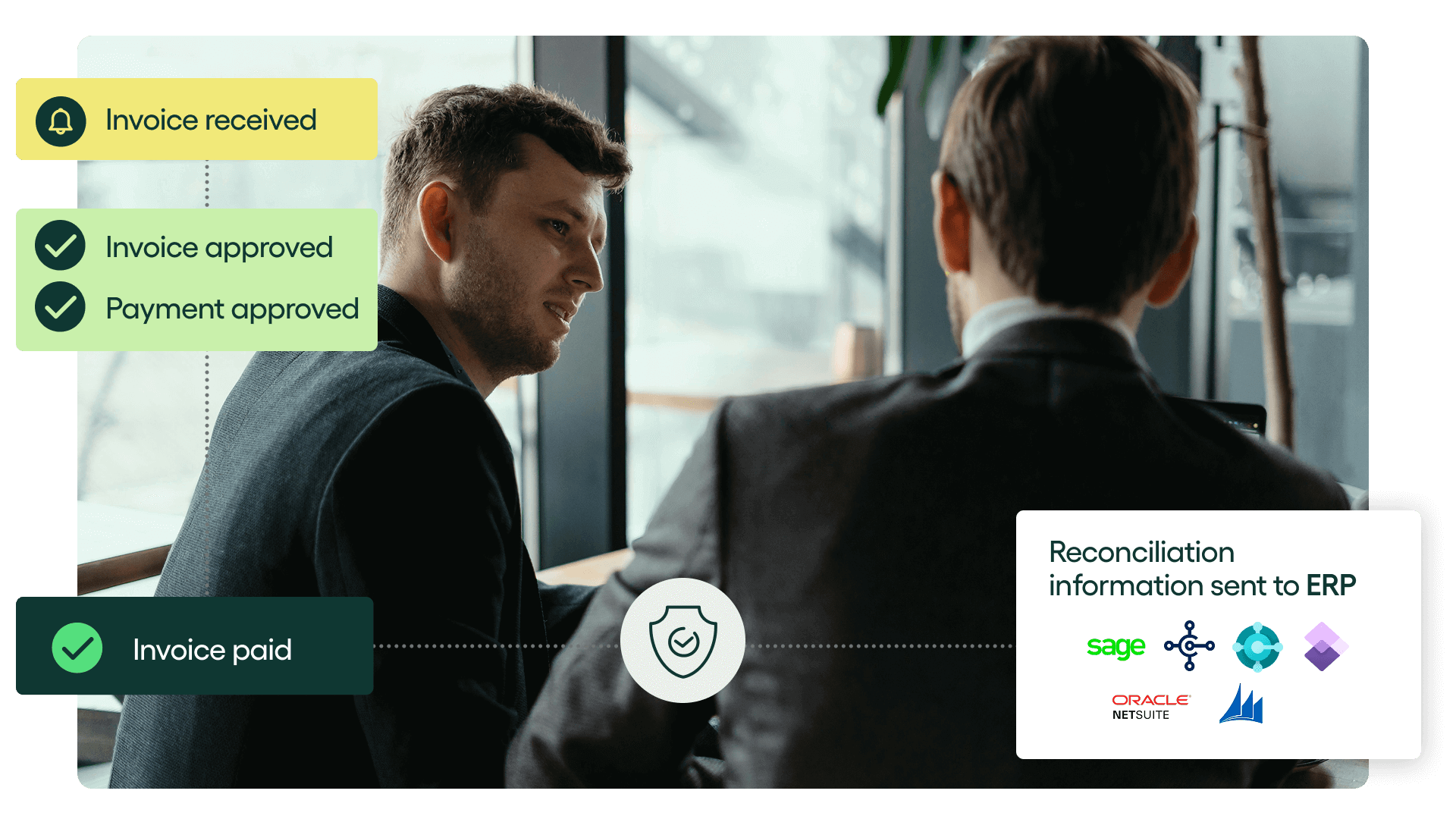
Rillion includes all the traditional features of automated invoice processing software, with AI applied where it makes a real difference:
- AI-powered invoice capture: Intelligent invoice capture extracts data across invoice formats with ~90% accuracy and suggests correct general ledger codes based on past patterns.
- 3-way purchase order matching: Increase accuracy and compliance with automated 3-way PO matching.
- Approval workflows: Set customizable rules or AI-driven suggestions for automated approval workflows. Option for role-based approval rules.
- Automate payments: Rillion offers automated payments, including secure virtual cards and automated reconciliation.
- In-depth reporting: Advanced reporting and analytics for spend visibility across entities.
- Multi-entity management: Approve invoices, manage spend, and gain real-time visibility across multiple companies or locations from one screen.
- Role-based approval workflows: Assign permissions based on roles to improve security, compliance, and efficiency.
- Virtual card payments with rebates: Securely pay vendors using virtual cards, reducing fraud risk.
- 50+ ERP Integrations: Sync invoices, approvals, and payments directly into 50+ leading ERPs (including Microsoft Dynamics, NetSuite, Sage Intacct, and SAP Business One), eliminating double entry and ensuring clean data for month-end close.
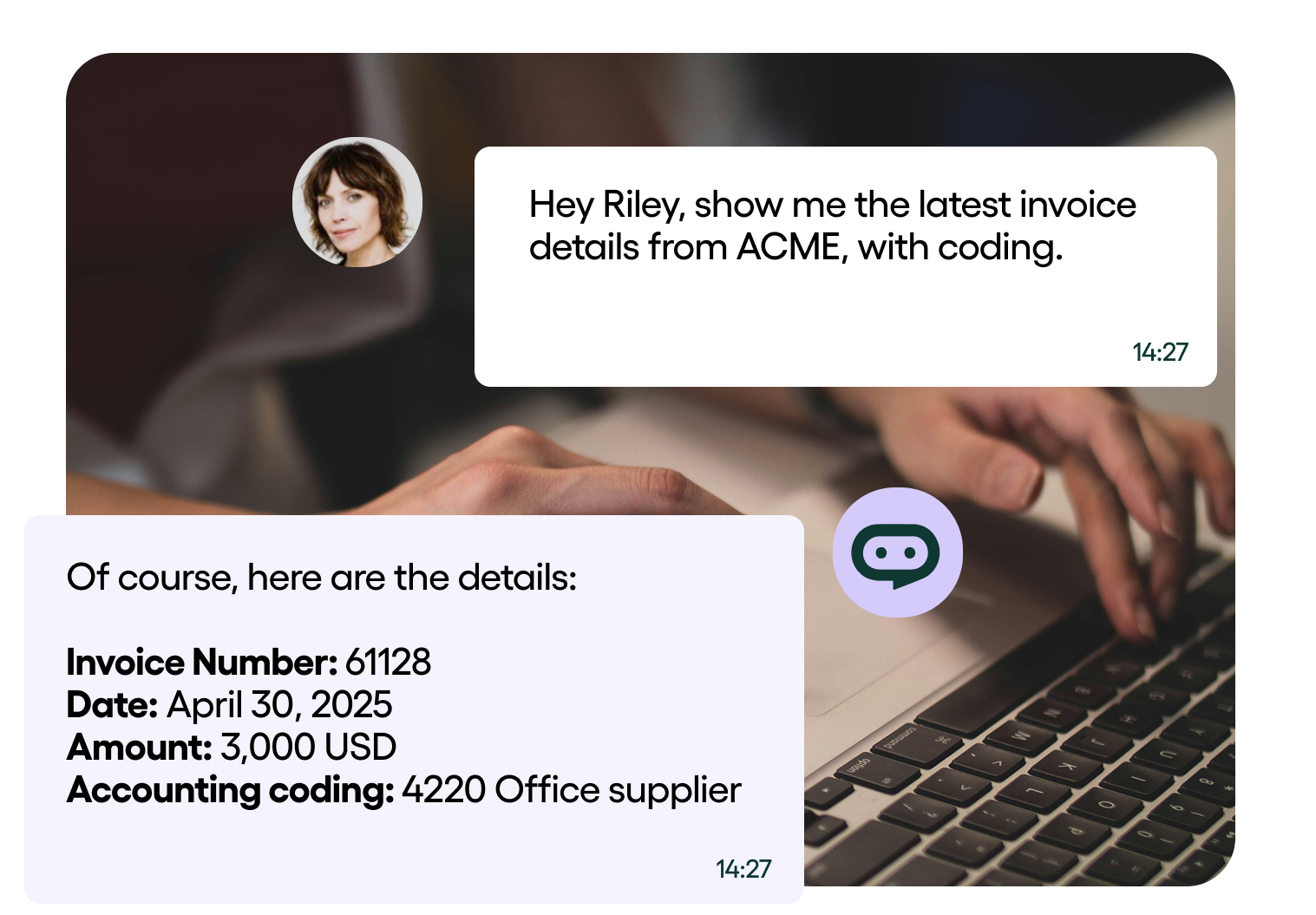
- Riley, the AI Assistant: Ask the built-in AI questions about invoices, suppliers, or workflows and get instant answers.
Rillion’s standout feature – Multi-entity invoice management
Managing invoices across multiple entities doesn’t have to mean juggling systems. With Rillion’s multi-entity management, you can manage subsidiaries and business units through a central platform where you get full visibility into all transactions. Finance teams can get the insights they need without constantly switching between systems.
Mid-sized and large companies can add Rillion Pay to facilitate secure payments to vendors using their preferred payment method. This drastically improves payment efficiency and helps reduce fraud risks.
Who is Rillion built for?
Rillion is ideal for mid-market companies that process thousands of invoices annually. It’s suitable for companies operating in industries like healthcare, manufacturing, and hospitality. It’s also perfect for multi-national corporations that need to automate invoice processing across multiple entities in different countries.
Companies that already use ERP systems like SAP, Oracle, or Microsoft Dynamics can benefit from Rillion’s deep native integrations. Finance teams get a clear view of their accounts payable, helping them track spending and forecast cash flow with confidence.
Read how Lindström uses Rillion’s invoice management solution to standardize and centralize its accounts payable process.2. Xero – Automated invoicing software for small businesses
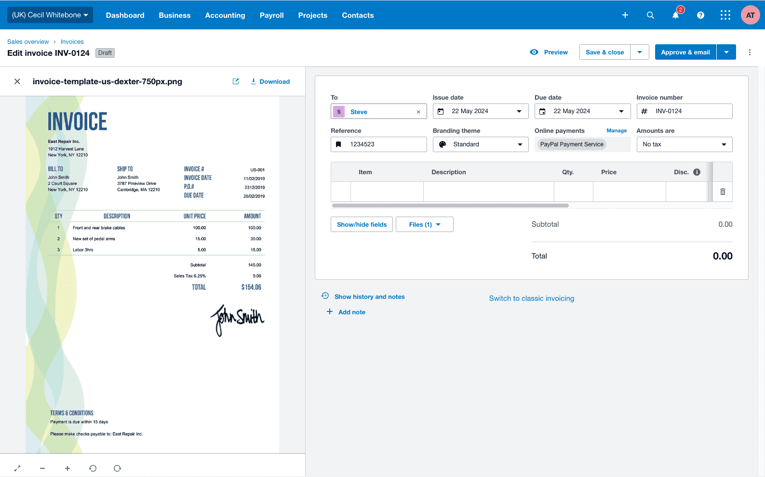
Xero is a user-friendly accounting platform primarily designed for bookkeepers and accountants. However, small to mid-size businesses can use it to automate accounting tasks and maintain accurate records. It also includes expense management tools for businesses to track and manage expenses.
Key features in Xero’s invoice management software include:
- Automated invoice data capture: Upload bills directly to Xero or forward them from your email, and Xero’s AI handles the rest.
- Accounting dashboard: Enables you to keep an eye on the day-to-day operations and manage key metrics like account balance, cash flow, and invoice status.
- Flexible vendor payments: Works with online payment options like Stripe and GoCardless to let suppliers pay with a convenient option.
- Mobile app: Manage accounting operations on the go via the mobile app where you can send invoices, see cash flow, and reconcile accounts.
- Native integrations: Connect the apps you use in your workflows and centralize your work in one location.
Overall, users cite positive experiences with the platform noting its ease of use in managing their accounts. However, one user struggles with their supplier invoices not being captured properly.
Xero’s standout feature – Bank feed integration
A key feature of Xero is its bank feed integration, which allows users to connect their bank with Xero for faster and more accurate reconciliation. Xero offers direct feeds from over 21,000 financial institutions. Once connected, it imports bank transactions and matches them to invoices and bills with minimal human intervention.
Who is Xero built for?
Xero is built to help small to medium-sized businesses manage their accounting needs. It also comes with an array of invoice automation features, making it a solid choice for startups and scaling companies that need these capabilities without the enterprise complexity or price tag.
3. BILL – Invoice automation software featuring seamless integrations
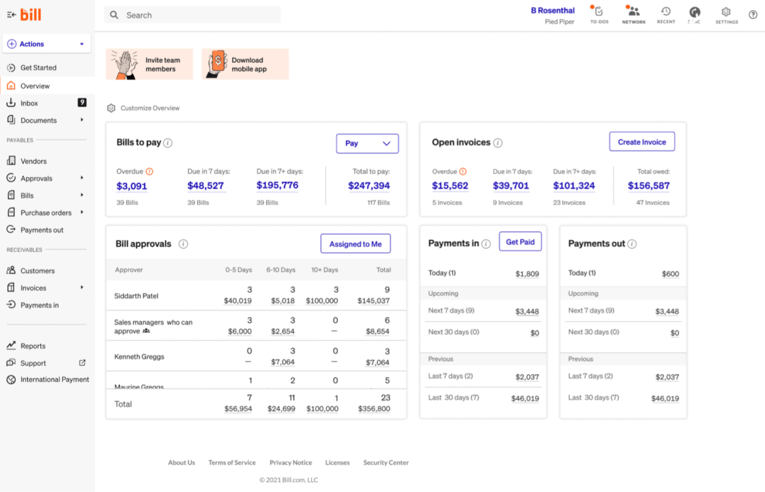
BILL (formerly Bill.com) is a cloud-based AP solution that enables businesses to automate financial workflows, such as invoicing, expense tracking, and payments. It features AI-powered capabilities that companies can use to eliminate errors and prevent fraud.
Key features in BILL’s invoice management software include:
- Smart invoice capture: An AI-powered optical character recognition automatically captures and extracts invoice data to reduce manual data entry.
- Approval workflows: Customizable approval workflows let you automatically send invoices to the right people to keep payments on track.
- Integrations with 2-way sync: Supports direct integrations with accounting systems like NetSuite, QuickBooks, and Xero to ensure data accuracy.
- Flexible payment options: Supports a range of payment options, including ACH, virtual cards, and international wires to over 130 countries.
- Internal controls: Internal controls let you set custom roles and permissions to add a layer of security to your invoicing processes.
Users comment that BILL is easy to use out of the box, making it a great choice for businesses looking for a solution they can quickly get started with. However, some users note occasional technical issues like syncing problems.
BILL’s standout feature – Extensive vendor network
BILL has an extensive network of over 5 million vendors. If a vendor you’re working with is already on BILL, you can send an invitation to connect within the network where you can submit and track invoices in one place. Using the network can help protect against email compromise, one of the leading causes of payment fraud.
Who is BILL built for?
BILL is primarily designed for small to mid-sized businesses that process anywhere from a few dozen to hundreds of invoices monthly. It’s a solid choice for businesses looking to modernize their invoicing processes without the complexity of enterprise setups.
4. Basware – Intelligent invoice lifecycle management with global compliance
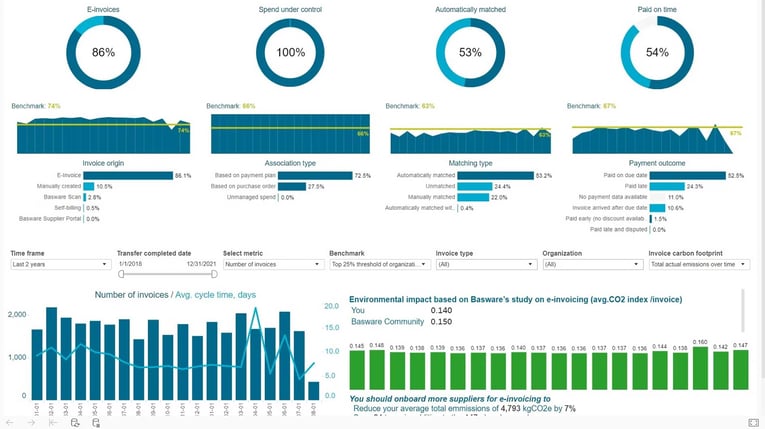
Basware helps businesses transform and centralize their entire invoice lifecycle in one place by offering purchase-to-pay and e-invoicing in one package. It uses an invoice-centric AI that provides visibility into the entire invoice life cycle to enable faster approvals.
With these capabilities, businesses can quickly capture and validate invoices against purchase orders and contracts. This helps cut manual data entry and reduce errors like duplicate invoices and over-payments.
Key features in Basware’s invoice management software include:
- AI-powered automation: Uses machine learning technology trained on data from over 2 billion invoices to accurately capture and extract invoice data
- ERP integrations: Connects to over 250 ERP systems to ensure smooth integration across different infrastructures.
- Analytics and reporting: Comprehensive dashboards and reporting tools enable you to track KPIs and compare performance against industry peers.
- Global invoice compliance: Maintains centralized records with full audit trails to simplify reporting and ensure audit readiness.
- Procure-to-pay (P2P) automation: Offers a suite of P2P tools to automate procurement and enable full visibility of spending.
Users like that Basware offers an intuitive interface and keeps invoices in one central location. However, some users note that the platform occasionally lags and loads slowly.
Basware’s standout feature – Basware Network
One feature that makes Basware stand out is its global e-invoicing network. It lets businesses connect and onboard suppliers into their procurement process. The solution ingests and captures data from all invoice formats, including paper, PDF, and EDI, to eliminate data entry and reduce manual processing.
Non-compliance with e-invoicing mandates can lead to financial penalties. The Basware Network helps ensure compliance across Business-to-Government (B2G) and Business-to-Business (B2B) e-invoicing mandates. It also helps comply with Value-Added Tax regulations in over 50 countries to minimize risks.
Who is Basware built for?
Basware is best suited to large international organizations that process over 50,000 invoices a year. Because it handles multi-currency and multi-entity invoice processing, large finance teams have full visibility of spending across locations.
Related read: 12 best Basware alternatives for AP automation in 2026
5. Tipalti – Accounts payable automation for global payments
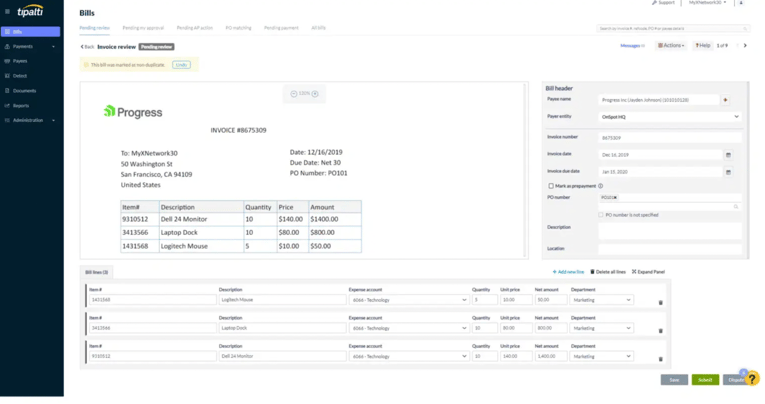
Tipalti is a global end-to-end AP automation system. It uses AI to capture, extract, and match invoice data to purchase orders to reduce manual data entry. Tipalti’s “intelligent purchase approval engine” automates tasks like invoice matching, purchase order approvals, and global payments. The approval engine also supports parallel approvals, so multiple approvers can approve requests simultaneously.
Key features in Tipalti’s automated invoice processing software include:
- Automated tax compliance: Features international tax capabilities to help multi-national companies ensure compliance across jurisdictions.
- Global payment support: Supports over 50 international payment methods, including ACH, EFT, SEPA, and more.
- Multi-entity management: Enables companies with international operations to manage multiple subsidiaries and apply unique workflows for each.
- Spend analytics and insights: Dashboards provide full visibility into financial data, allowing teams to identify bottlenecks in the approval process.
- Pre-built integrations: Integrates with popular platforms, such as Oracle NetSuite, Sage, and QuickBooks.
Overall, Tipalti has favorable reviews with one user praising its invoice capture capabilities. However, some users reported initial implementation issues, but these were quickly addressed with help from support.
Tipalti’s standout feature – Global payments
Tipalti provides payments to over 200 countries and territories in 120 currencies with 50+ payment methods, including card, ACH, and more. Using Tipalti’s built-in payment rules, you avoid any mis-transfers and ensure flexible, secure payments.
Plus, proactive automated notifications keep suppliers informed throughout payment processing, so they know when their payment will arrive and if it fails.
Who is Tipalti built for?
Tipalti works best for mid-sized to large businesses that process high invoice volumes and manage complex global supplier networks. Its self-service portal lets companies onboard suppliers and validate tax IDs to ensure compliance with e-invoicing mandates.
6. Coupa – Cloud invoicing management software with e-invoicing capabilities
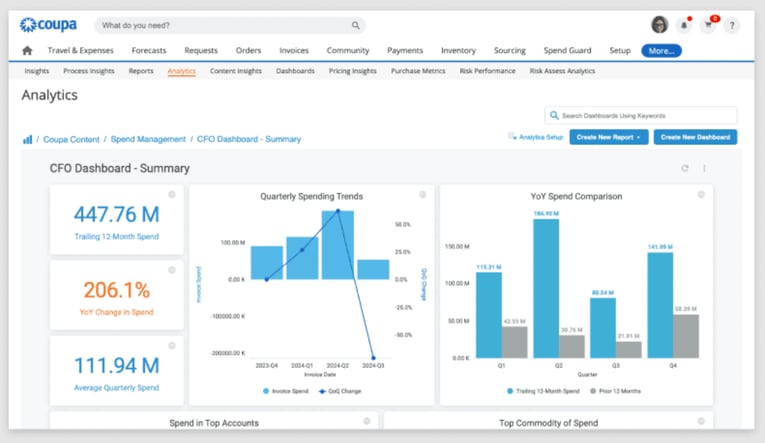
Coupa primarily functions as a spend management software, but it also offers AP automation capabilities. These include invoice capture, 3-way invoice matching, and multi-level validation. Combined, they help companies automate payment workflows.
Key features in Coupa’s invoice management software include:
- Invoice capture: The AI-driven platform automatically extracts data from invoices to cut down on manual data entry.
- Fraud detection: Monitors real-time activity across direct and indirect spending to detect and flag potential fraud like expense claims.
- Supplier portal: Connects purchasing organizations with suppliers to facilitate payments.
- Spend analysis: Dashboards and reports deliver insights into spending patterns and identify cost-saving opportunities.
- Virtual cards: Enables companies to issue virtual cards to gain more control over their spending and automate reconciliation processes.
Users find Coupa easy to use, allowing them to manage and pay their vendors on time. However, some users note that the platform isn’t as customizable as they’d like.
Coupa’s standout feature – Community intelligence
Coupa has a proprietary “community intelligence” feature, which taps into data from over $8 trillion in transactional spend that flows through its platform. It analyzes spending patterns and identifies potential cost savings.
It even benchmarks spending against industry peers and provides tailored recommendations to improve profitability.
Who is Coupa built for?
Coupa is built for medium-sized to large enterprises moving beyond basic invoice automation. It features e-invoicing capabilities that help businesses navigate regional taxes, “touchless” invoicing with built-in approval workflows, and automated expense management. Over 55% of Fortune 500 companies use Coupa for spend management.
7. Sage Intacct – Intelligent invoice automation for modern finance teams
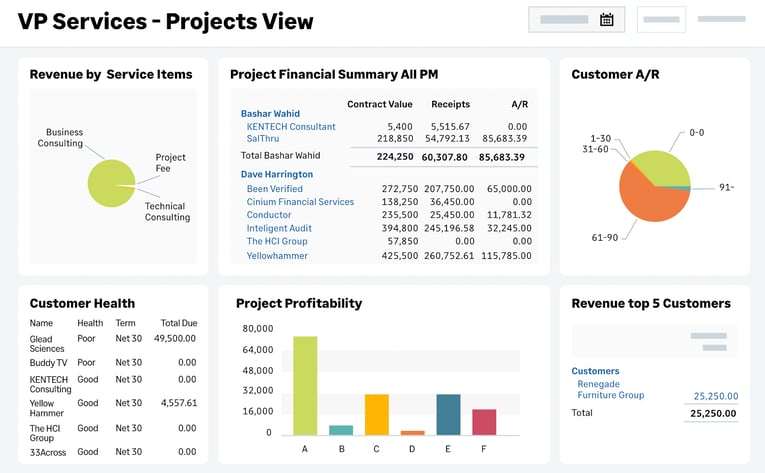
Sage Intact is a scalable financial management platform that handles invoicing, purchasing, and bank reconciliation in one platform. Its automated invoicing features allow businesses of all sizes to accelerate and simplify approval workflows while eliminating manual invoicing. It also integrates with payment platforms like Stripe to facilitate digital payments.
Key features in Sage Intacct’s invoice management software include:
- AI-powered data capture: Sage Ai extracts and captures invoice details, identifying details like amounts, dates, and line items to speed up processing.
- Multi-entity management: Manage and process invoices across multiple entities and locations within a single platform.
- Dimensional reporting: Link to “dimensions” or tags beyond the standard general ledger (GL) codes for more granular financial reporting and analysis.
- Operational Flows: Use pre-built workflows to build forms and approval flows using a no-code builder.
- Marketplace for add-on solutions: Offers a library of pre-built integrations and workflows that companies can use to extend the platform’s functionality.
Users find the reporting features helpful in creating audit-ready reports that comply with Generally Accepted Accounting Principles (GAAP). However, some users note a steep learning curve and suggest the platform could benefit from a more modern interface.
Sage Intacct’s standout feature – Project costing
One standout feature of Sage Intacct is its project costing and billing capabilities, which are particularly useful for professional service firms and agencies. Companies can track expenses for individual clients and see how previous projects performed financially, so they can bid smarter to improve profitability.
Who is Sage Intacct built for?
Sage Intacct is suitable for a variety of businesses, but it’s ideal for small to mid-sized businesses that need more structure and clarity across their financial workflows. Features like AP automation and cash management make it a good choice for those who want more control of their accounting.
8. Concur Invoice – Enterprise-grade invoice management software
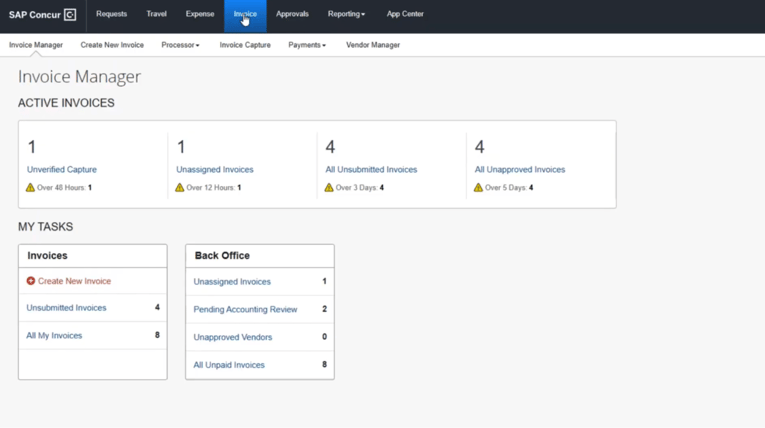
Concur Invoice is SAP’s invoice management solution. It lets businesses automate their accounts payable processes and it integrates with Concur Expense and Concur Travel to unify spending management.
Key features in Concur Invoice’s invoice management software include:
- Invoice capture: Invoice data is automatically captured using OCR technology and routed to the right approvers for review.
- Three-way matching: Automatically matches invoices against purchase orders, receipts, and invoices to avoid errors like duplicate payments.
- Business Intelligence: Consolidates spending by travel, expense, invoice, and credit card data to provide a complete picture of company spend.
- Mobile-ready apps: Enables busy approvers to review and approve invoices no matter where they are in a few clicks.
- ERP integrations: Offers native integrations with SAP to connect disparate systems and provide a centralized view of spending — useful if your company already uses its ERP software.
Users find the automation features easy to use to speed up approvals. However, others note that the interface often feels outdated and navigation isn’t always intuitive.
Concur Invoice’s standout feature – Unified spend management
Managing spend across invoices, travel expenses, and cards can be challenging for multi-national corporations. Concur Invoice enables companies to unify spend management in a single platform for greater control and visibility.
However, Concur Invoice, Concur Expense, and Concur Travel are separate products, meaning organizations will need to spend more to take advantage of its unified spend management capabilities.
Who is Concur Invoice built for?
The platform is built for enterprises with high volumes of invoices and strong compliance requirements. It’s particularly valuable for businesses with operations in countries that have complex tax reclaim procedures, like Germany, UK, and Australia. Companies will need adequate IT and accounting resources to ensure a smooth rollout and to take full advantage of the platform.
Related read: 10 best SAP Concur Invoice alternatives for AP automation in 2026
How to choose the best invoice management solution
Not all invoice management software is created equal. What works for one company may not deliver the same results for another. What’s important is to choose a solution that meets your needs and addresses your operational pain points.
That said, here are some tips to narrow down your search:
- Prioritize fast and accurate invoice capture. Look for a solution that automatically extracts and captures invoice data from different formats, including PDFs, paper, and EDI.
- Consider ease of use. Your team will be more likely to adopt software if it’s easy to use and requires minimal onboarding.
- Look for native integrations. The invoice capture software you choose should work with the ERP and accounting systems you use to ensure seamless data flow.
- Consider scalability. A solution that can handle 50 invoices a month might buckle under 500, so make sure the platform can scale with your invoicing needs.
- Prioritize automation capabilities. The best invoice management systems feature automated workflows you can customize to fit your needs and reduce manual tasks.
- Review reporting and analytics. You’ll want real-time visibility into each stage of the AP process, so you can identify bottlenecks and create accurate forecasts.
- Evaluate customer support. Strong customer support is a must to ensure you can quickly resolve any issues that arise.
If you’re looking for invoice management software that excels at each of the above, then schedule a demo of Rillion today. Whether you’re constantly losing track of invoices or wasting countless hours on manual data entry, we can help.