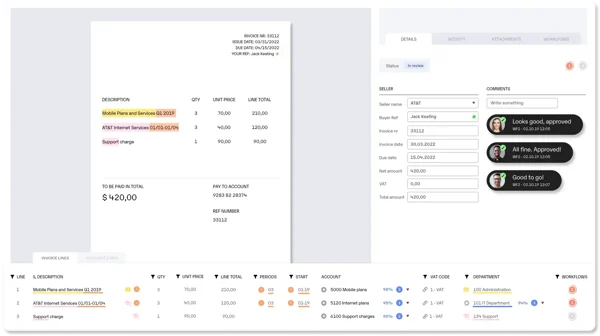
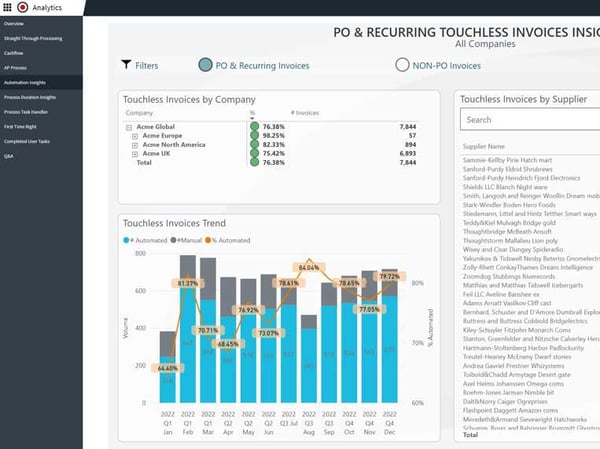

Coupa is one of the biggest names in spend management, and for good reason. Its source-to-pay platform covers everything from sourcing and procurement to supplier management, invoicing, expenses, and payments.
For large enterprises that need all of that under one roof, Coupa can make a lot of sense. But it won't be the right fit for every team. Implementation can be a major undertaking, costs can add up, and some users find the interface difficult to navigate or get comfortable with.
So, depending on what your business actually needs, another platform may be a better fit. Some Coupa alternatives offer similarly broad source-to-pay capabilities. Others focus on doing one part of the process really well.
Below, we've compared seven of the top Coupa alternatives, what each one covers, and where they make the most sense.
Compare Coupa alternatives
| Competitor | Why it’s a good Coupa alternative | Best for | Stand out feature |
| Rillion |
A more focused option for replacing Coupa’s AP automation and invoice workflows, with invoice capture, approvals, matching, payments, and ERP integrations. |
|
Multi-entity AP management with AI-powered automation that predicts approvers, codes invoices with over 90% accuracy, and runs 3-way PO matching automatically to cut approval times and prevent errors. |
| SAP Ariba |
Offers broad source-to-pay capabilities similar to Coupa and fits naturally into the wider SAP ecosystem. |
Large enterprises already using SAP |
SAP ecosystem integration |
| GEP Quantum Intelligence |
Covers the full source-to-pay lifecycle, making it one of the closest options for companies looking to replace Coupa across procurement. |
Companies that need a full source-to-pay replacement |
Embedded Mastercard virtual cards |
| Zycus |
Provides full source-to-pay coverage with AI agents working across sourcing, contracts, suppliers, procurement, and AP. |
Companies prioritizing AI across source-to-pay |
AI agents across source-to-pay |
| JAGGAER ONE |
Combines full source-to-pay coverage with advanced tools for complex sourcing events and supplier decisions. |
Companies with complex sourcing needs |
Sourcing optimization |
| Ivalua |
Offers broad source-to-pay capabilities with extensive no-code/low-code configuration for adapting processes and workflows. |
Companies that need highly configurable workflows |
No-code/low-code configuration |
| Oracle Fusion Cloud Procurement |
Covers source-to-settle and connects closely with Oracle’s wider finance and supply chain environment. |
Companies already using Oracle ERP |
Oracle ecosystem integration |
1. Rillion
Best for flexible, accurate AI-driven AP automation
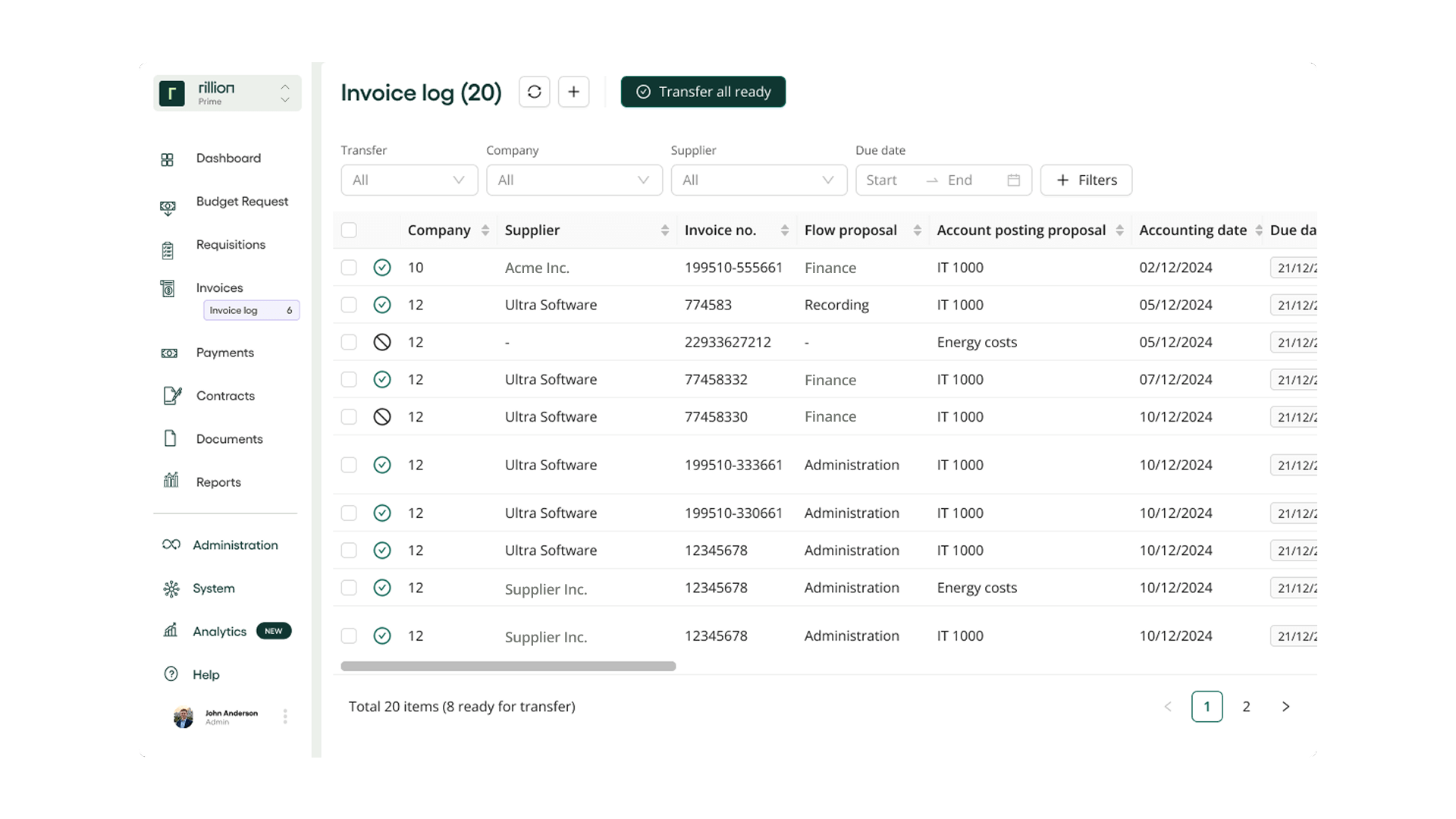 Rillion is an AI-powered AP software that captures invoices, simplifies approvals, streamlines payments, and reconciles those payments for you.
Like Coupa, you can stay in control with complete analytics and dashboards, three-way PO matching, and secure payment methods.
It also adapts to each company’s needs with AI-guided routing, customizable approval rules, automated reminders, and multi-entity management, all backed by reliable ERP integrations.
Rillion includes all the traditional features of an AP automation solution, with AI applied where it makes a real difference:
- AI invoice capture that extracts data across invoice formats with over 95% accuracy from the first invoice and suggests correct general ledger codes based on past patterns.
- Automated approval workflows that can be set to customizable rules or AI-driven suggestions.
- Payment automation including secure virtual cards and automated reconciliation.
- Advanced reporting and analytics for spend visibility across entities.
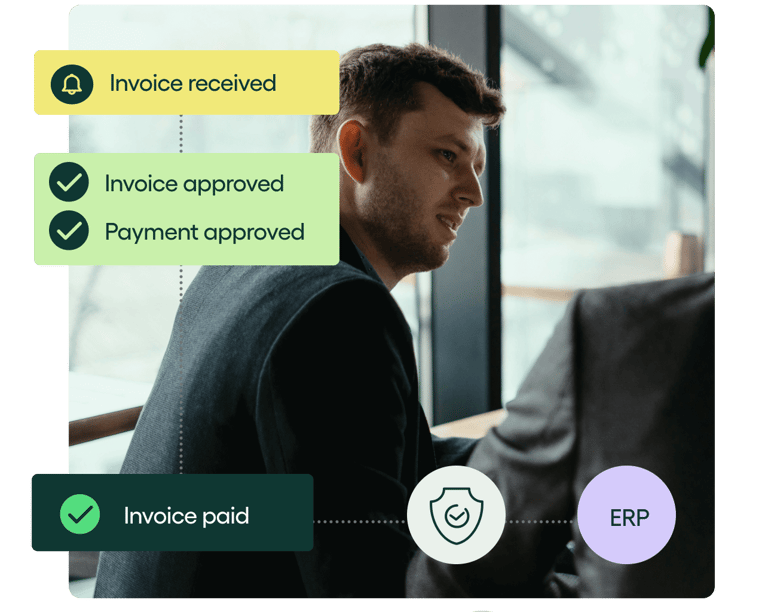
Other key features in the Rillion platform:
- Multi-entity management: Approve invoices, manage spend, and gain real-time visibility across multiple companies or locations from one screen.
- Role-based approval workflows: Assign permissions based on roles to improve security, compliance, and efficiency.
- 3-way purchase order matching: Increase accuracy and compliance with automated 3-way PO matching.
- Virtual card payments with rebates: Securely pay vendors using virtual cards, reducing fraud risk.
- Purchase-to-pay capabilities: Control indirect spend before invoices arrive with purchase requisitions, budget management, and contract management, including renewal reminders, automatic matching of recurring invoices to contracts and budgets, self-billing, and spend analysis.
- 50+ ERP Integrations: Sync invoices, approvals, and payments directly into 50+ leading ERPs (including Microsoft Dynamics, NetSuite, Sage Intacct, and SAP Business One), eliminating double entry and ensuring clean data for month-end close.
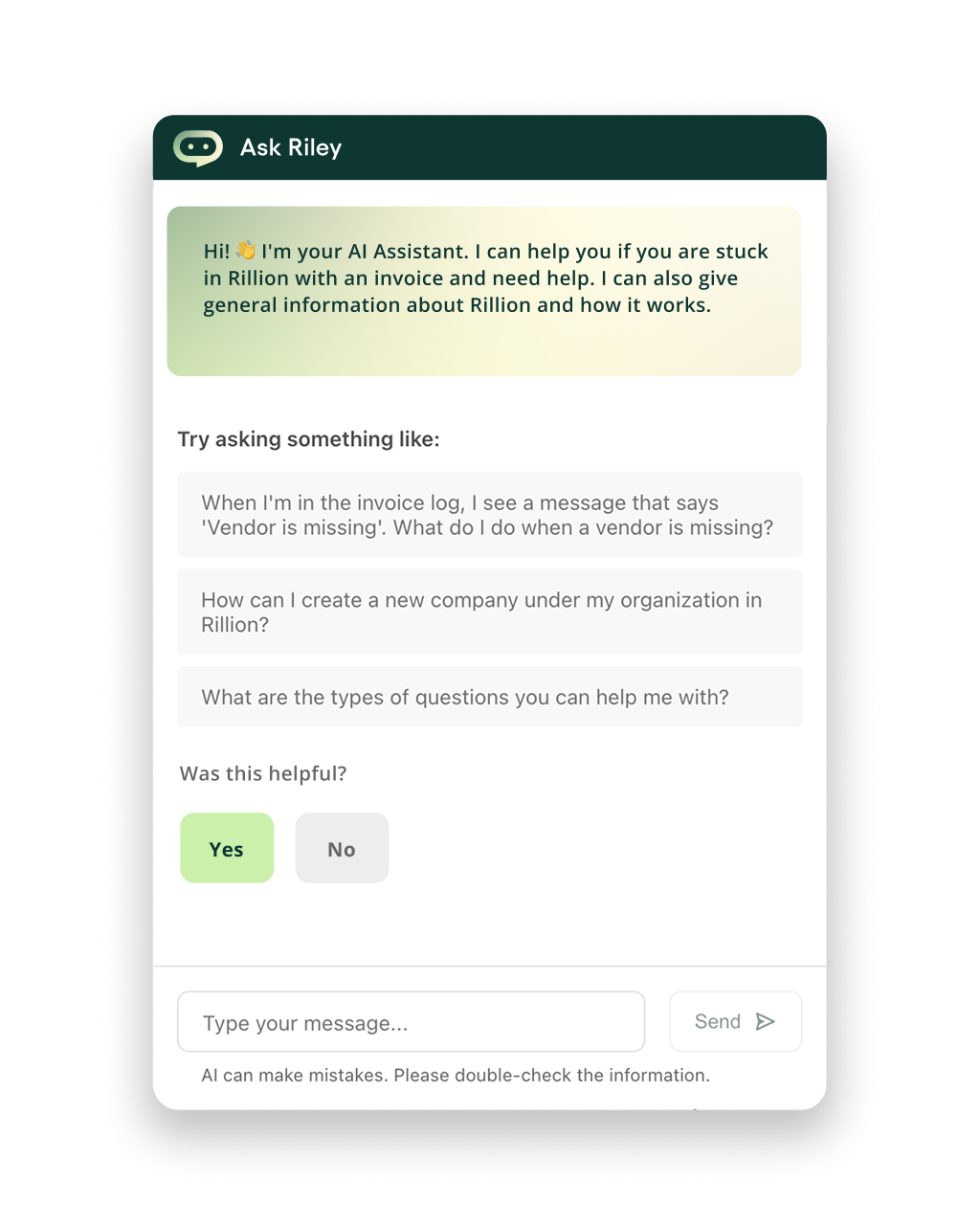
- Riley, the AI Assistant: Ask the built-in AI questions about invoices, suppliers, or workflows and get instant answers.
Why Rillion is a good alternative to Coupa
Rillion covers the core AP capabilities finance teams need and keeps the day-to-day experience simple and user-friendly. You can automate invoice capture, approvals, matching, and payments without making AP more complicated than it needs to be.
It’s especially valuable for multi-entity organizations, giving teams centralized visibility and control across different companies or locations while still allowing for local flexibility.
You can also count on easier onboarding and reliable customer support. On G2, Rillion scores higher than Coupa for both ease of setup (8.0 vs. 7.4) and quality of support (8.5 vs. 7.6).
What to be aware of
Rillion is focused on accounts payable, so it isn't a full source-to-pay replacement for Coupa. It doesn't cover Coupa's strategic sourcing, supplier sourcing, or employee expense capabilities.
If you need to replace Coupa across the entire procurement lifecycle, one of the broader source-to-pay platforms on this list is likely to serve you better.
Stand out feature: AI Invoice Capture
Unlike OCR-based tools that rely on templates and break when a layout changes, Rillion reads invoices the way a person would. It works from the very first invoice, and it needs no templates and no training period.
Built on a multimodal LLM, Rillion Capture extracts both header and line-level data from any format, whether it's standard or not, and it adapts instantly to new suppliers. It validates every value against your master data in real time and flags only the exceptions worth a second look. That gets you over 95% accuracy from day one, so manual correction no longer eats into your team's week.
Capture is built directly into Rillion rather than bolted on, so there's no third-party tool to manage and no vendor to call when your rules need to change. Customizable prompts let you define exactly what to capture and how to interpret it, so the system adapts to your process instead of forcing you to adapt to it.
Who is Rillion built for?
Rillion is best suited to mid-market companies processing 10,000+ invoices annually, particularly in industries like healthcare, manufacturing, and hospitality.
It’s especially valuable for organizations with multiple entities or subsidiaries that need consolidated visibility and streamlined workflows.
Rillion is for finance leaders who want to:
- Cut invoice processing and approval time with AI-driven automation, going 85% faster
- Centralize AP across multiple entities for better control and reporting
- Reduce fraud risk and payment errors with secure, automated vendor payments
- Eliminate manual double entry through seamless ERP integration with 50+ leading ERPs
- Give AP teams peace of mind with intuitive, user-friendly software
- Work with a trusted partner to implement AI across their finance processes, confidently and securely
Read here how Forenom used Rillion's AI and contract matching to process 100,000 invoices a year, auto-approve 95% of recurring invoices, and save 1,000+ hours every month.
2. SAP Ariba
Best for large enterprises already using SAP
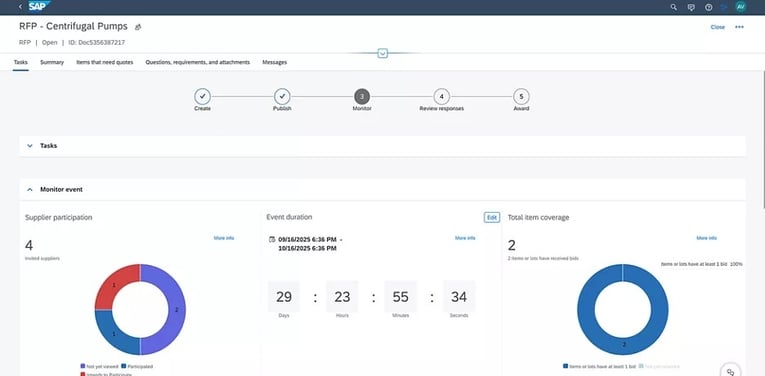
SAP Ariba is another heavyweight in the source-to-pay space. Like Coupa, it gives large organizations a broad set of tools for managing spend, from finding and managing suppliers to purchasing, invoicing, and analyzing spend.
The biggest reason to consider it is SAP. If your company already relies heavily on SAP, Ariba gives you a procurement platform that fits into that wider ecosystem.
Key features include:
- Strategic sourcing: Run sourcing events, compare suppliers and bids, and optimize awards, with AI baked into the process.
- Procure-to-pay: Take purchases from requisition and approval through purchase orders, receiving, and invoicing.
- Supplier management: Onboard suppliers and keep track of qualifications, performance, and risk throughout the relationship.
- SAP Business Network: Connect with suppliers, form trading relationships, place orders, and receive invoices through a shared network.
- Invoice automation: Automates invoice processing, matching, validation, and approval.
- Spend analytics: Gives procurement teams visibility into spending and supplier data to support sourcing and purchasing decisions.
- SAP integrations: Works closely with the wider SAP ecosystem and can also connect with third-party systems.
Why SAP Ariba is a good alternative to Coupa
Coupa and SAP Ariba are competing for a similar type of customer: large organizations that want much of their procurement process managed through one platform.
That makes Ariba an especially logical Coupa alternative if you're already an SAP customer. You still get broad source-to-pay coverage, but within an ecosystem your finance, procurement, and IT teams may already know.
Its supplier network is another advantage. SAP Business Network gives organizations a large existing network through which they can find suppliers, collaborate, and exchange purchasing and invoicing documents.
What to be aware of
If simplicity is the main reason you're leaving Coupa, Ariba may not be the answer. It has a steep learning curve, and the interface can feel rigid and overly complex for everyday users, so teams may need more training to get comfortable with the platform.
And if you only need to replace Coupa for AP, you probably don't need everything Ariba offers. A dedicated AP platform may be a better fit.
Stand out feature: SAP ecosystem integration
Ariba's biggest advantage is its connection to the wider SAP ecosystem. Procurement teams can manage sourcing, suppliers, purchasing, and invoicing and keep those processes connected with the systems already used across the business.
3. GEP Quantum Intelligence
Best for companies that need a full source-to-pay alternative
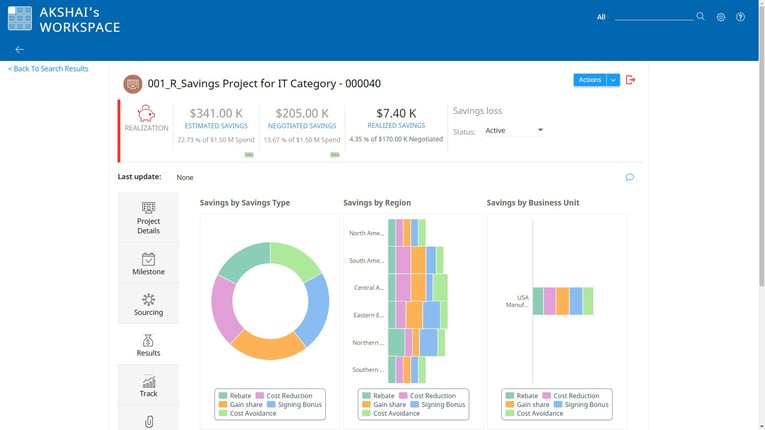
For companies that aren't looking to replace just one part of Coupa, GEP Quantum Intelligence is a strong alternative that covers the entire source-to-pay process.
It serves both mid-market companies and large enterprises, and stands out from Coupa with stronger G2 ratings for ease of setup and quality of support.
Key features include:
- Strategic sourcing: Run sourcing events, manage RFPs and auctions, compare bids, and select suppliers.
- Contract management: Create and manage supplier contracts and connect negotiated terms to purchasing and procurement workflows.
- Supplier management: Onboard suppliers and manage supplier information, performance, and risk.
- Procure-to-pay: Manage requisitions, purchase orders, receiving, invoice matching, and payments.
- Direct and indirect procurement: Manage purchasing across both operational supplies and the materials used to produce goods.
- Payments: Pay suppliers through the platform, including with virtual cards through GEP's partnership with Mastercard.
Why GEP Quantum Intelligence is a good alternative to Coupa
If you're leaving Coupa but still need a full source-to-pay platform, GEP Quantum Intelligence is one of the closest alternatives to consider. You aren't narrowing down to AP or purchasing alone. You can manage the entire procurement lifecycle in one place.
GEP also has an edge in a couple of noteworthy areas on G2. Its ease of setup score is 8.6 compared with 7.4 for Coupa, and its quality of support score is 8.5 compared with Coupa's 7.6.
Those numbers don't mean there won't be work involved in rolling out a platform this broad. But if setup and ongoing support are two of your frustrations with Coupa, they give GEP a meaningful advantage to look into.
What to be aware of
There can still be a learning curve, especially for teams getting familiar with the full range of features GEP Quantum Intelligence offers. Training may be needed before everyone is comfortable using the platform day to day.
Price is worth looking at closely too. GEP doesn't publish its pricing, but G2 feedback points to the platform being on the expensive side, especially for smaller businesses.
Standout feature: Embedded Mastercard virtual cards
GEP partners with Mastercard to embed its virtual card technology (connected to more than 80 banks globally) directly into GEP Quantum Intelligence's procure-to-pay solution, so businesses can make supplier payments within the same system they use to manage procurement and invoices.
That keeps payment data connected to the rest of the process, making invoice reconciliation easier and giving finance teams better visibility into payments and cash flow.
4. Zycus
Best for companies prioritizing AI across source-to-pay
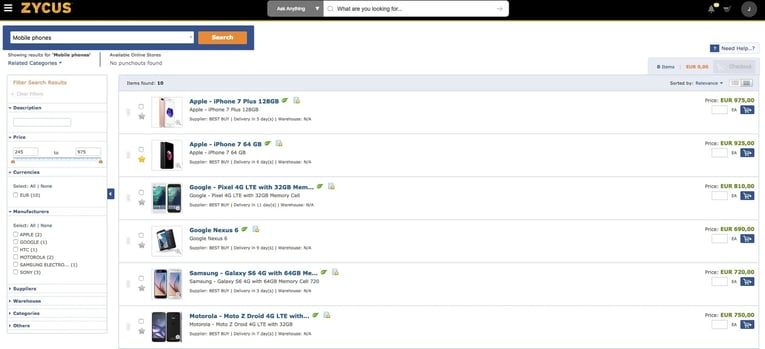
Zycus is another full source-to-pay alternative to Coupa, with an especially strong focus on AI-driven procurement. Its Merlin Agentic Platform uses specialized AI agents across the procurement lifecycle, from intake and sourcing to supplier management and accounts payable.
It’s a good fit for procurement teams that want full S2P coverage with AI agents taking on more of the work along the way.
Key features include:
- AI-powered sourcing: Create sourcing events, identify suppliers, analyze bids, and support award decisions with AI.
- Autonomous negotiations: Use AI agents to negotiate with suppliers across price and non-price terms, including payment terms, warranties, and discounts.
- Contract management: Manage contracts across their lifecycle, with GenAI supporting tasks like contract analysis and obligation extraction.
- Supplier management: Manage supplier onboarding, performance, risk, and supplier data.
- Procure-to-pay: Manage purchasing from requisition and purchase orders through invoicing and payment.
- Procurement orchestration: Connect intake, sourcing, contracts, and purchasing through automated workflows that route requests to the right next step.
- AI-powered analytics: Ask questions about spend, suppliers, contracts, and risk in natural language and get real-time insights from procurement data.
Why Zycus is a good alternative to Coupa
Zycus positions its organically built S2P platform as offering faster deployment and a lower total cost of ownership, which could make it appealing to companies looking for broad procurement capabilities without the cost of a traditional enterprise suite.
And you aren't giving up the focus on AI by moving away from Coupa. Agentic AI is a major part of Zycus too, with its Merlin agents taking on work across sourcing, negotiations, supplier management, contracts, and AP.
What to be aware of
Coupa currently comes out ahead of Zycus in important areas on G2. It scores higher for meeting requirements (8.1 vs. 7.3), ease of use (8.3 vs. 7.1), and quality of support (7.6 vs. 7.1).
That doesn't rule Zycus out, especially if its AI capabilities and potential cost savings are priorities. But the ratings are worth weighing against those advantages when comparing the two.
Standout feature: AI agents across source-to-pay
Zycus’ Merlin platform includes specialized agents that can carry out procurement tasks themselves. That gives procurement teams the option to automate parts of the work that would otherwise need someone to move the process forward manually.
5. JAGGAER ONE
Best for companies with complex sourcing needs
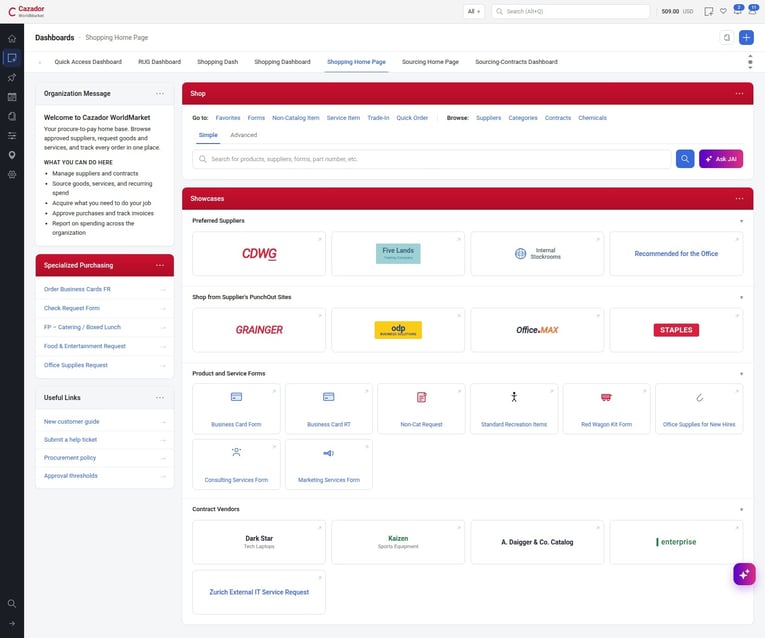
JAGGAER ONE is another full source-to-pay platform, but where it really stands out is sourcing, especially for organizations dealing with more complex categories and supplier decisions.
Its sourcing tools go beyond basic RFQs and bid comparisons, with support for complex auctions, direct material and BOM sourcing, and optimization tools that help teams compare different award scenarios.
Key features include:
- Strategic sourcing: Run RFIs, RFPs, and RFQs, multi-round negotiations, and several types of auctions across direct, indirect, and tail spend.
- Sourcing optimization: Model different award scenarios, constraints, business rules, and supplier offers to find the best combination for complex sourcing events.
- Direct material and BOM sourcing: Source components using multi-tier BOMs, cost breakdowns, should-cost models, tooling costs, and tariff overlays.
- Supplier management: Manage supplier onboarding, information, risk, performance, and other supplier data throughout the relationship.
- Contract management: Manage contract authoring, negotiation, obligations, renewals, and other stages of the contract lifecycle.
- Procure-to-pay: Manage requisitions, purchasing, invoicing, and payments within the wider JAGGAER ONE platform.
- Spend analytics: Bring spend data from multiple ERPs and business units together to analyze spend, identify savings opportunities, and track results.
Why JAGGAER ONE is a good alternative to Coupa
JAGGAER is especially compelling if complex sourcing is a priority. Its sourcing optimization tools are built for complicated events and award decisions, and that strength shows up on G2, where JAGGAER scores 9.7 for strategic sourcing compared with Coupa's 6.9.
It also earns higher marks than Coupa for supplier relationship management, purchasing, procure-to-pay, and quality of support.
What to be aware of
If simplicity is already one of your pain points with Coupa, JAGGAER may not solve it. Coupa scores higher on G2 for both ease of use and ease of setup, so teams moving to JAGGAER shouldn't necessarily expect a simpler experience.
Standout feature: Sourcing optimization
JAGGAER's sourcing optimization tools are built for events where choosing the best supplier isn't as simple as comparing prices. Teams can model different award scenarios while accounting for constraints like supplier capacity, business rules, risk, quality, and other requirements.
They can then compare those scenarios side by side to see how different sourcing decisions affect the final award.
6. Ivalua
Best for companies that need highly configurable workflows
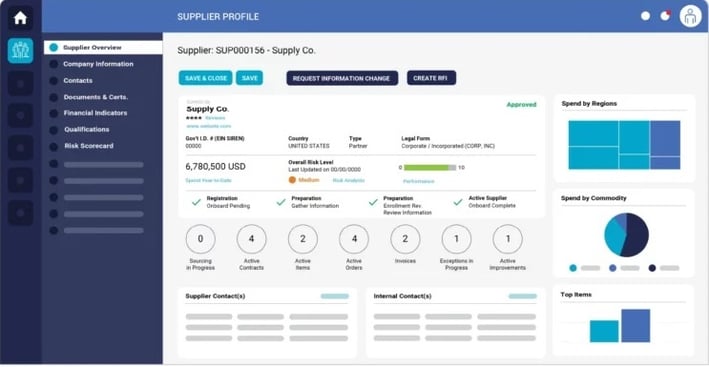
Ivalua is a full source-to-pay platform built with flexibility in mind. It covers sourcing, supplier management, contracts, purchasing, invoicing, and other procurement processes, but gives companies plenty of room to adapt how those processes work.
Its no-code/low-code configuration tools let teams tailor workflows, rules, and other parts of the platform around their own processes instead of relying only on out-of-the-box workflows.
Key features include:
- Strategic sourcing: Run RFI, RFP, and RFQ events, evaluate bids, and automate scoring, optimization, and award recommendations.
- Supplier management: Manage supplier onboarding, information, risk, performance, and collaboration from one platform.
- Contract management: Author, review, and approve contracts, track obligations and milestones, and use AI to identify terms and potential risks.o
- eProcurement: Digitize purchasing from requisition to receipt, with guided buying, automated approvals, purchase order management, and real-time budget controls.
- AP automation: Automate invoice capture, matching, approvals, and other steps in the invoice-to-pay process.
- Spend analysis: Analyze spending to identify savings opportunities, monitor risk, and support sourcing decisions.
- Configurable workflows: Design and adapt procurement processes using Ivalua's no-code workflow engine.
Why Ivalua is a good alternative to Coupa
One of Ivalua's biggest strengths is how much you can shape the platform around your existing procurement processes. You can configure workflows, approval chains, and rules without pulling in a dev team every time something needs to change.
For companies with different processes across business units, regions, or types of spend, the platform can bend to fit those differences instead of requiring one process for everyone.
What to be aware of
Like JAGGAER, Ivalua may not be a step down in complexity compared to Coupa. It actually scores lower than Coupa on G2 for both ease of use (8.2 vs. 8.3) and ease of setup (7.0 vs. 7.4).
Several G2 reviews also back this up, noting that the initial setup and implementation can be difficult.
Standout feature: No-code/low-code configuration
Ivalua offers a complete no-code configuration toolkit and more than 200 pre-built add-ons, including connectors, workflows, AI, reports, UI/UX, and regional compliance. Companies can start with pre-built capabilities and tailor the platform further as their requirements evolve.
7. Oracle Fusion Cloud Procurement
Best for companies already using Oracle ERP
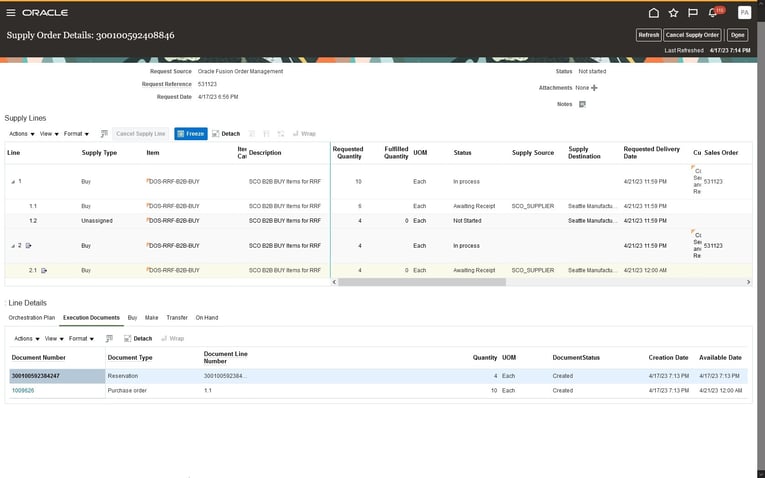
Oracle Fusion Cloud Procurement is a source-to-settle suite covering sourcing, contracts, purchasing, supplier management, and procure-to-pay.
It's part of the wider Oracle Fusion Cloud Applications suite and works within Oracle's ERP and supply chain environment, making it a natural option for companies already using Oracle across their finance and operations.
Key features include:
- Sourcing: Manage supplier negotiations, evaluate responses and bids, rank suppliers, and use AI to support sourcing activities.
- Supplier management: Centralize and manage supplier data, and give suppliers self-service portal access for collaboration, onboarding, and transaction processing.
- Contract management: Author and negotiate procurement contracts and keep track of approvals, obligations, amendments, and renewals.
- Self-service procurement: Give employees a user-friendly way to make purchases, with search and catalogs, automated workflows, and access to approved suppliers and negotiated pricing.
- Purchase order management: Create and manage purchase orders and agreements and track purchases through receiving.
- Analytics: Get visibility into procurement spend and performance across suppliers, sourcing, contracts, and purchasing.
Why Oracle Fusion Cloud Procurement is a good alternative to Coupa
For companies already running Oracle ERP, there’s a practical advantage to keeping procurement in the same ecosystem.
The G2 comparison also points to a couple of areas where Oracle scores higher. It earns 9.0 for procure-to-pay compared with Coupa's 7.9, and 8.8 for meeting requirements compared with Coupa's 8.1.
What to be aware of
Oracle Procurement can integrate with third-party systems, so you don't need to run your entire business on Oracle to use it. But its biggest advantage is naturally more valuable if you're already using Oracle ERP and other Oracle applications.
It's also not necessarily the easier option to implement. On G2, Oracle scores 6.7 for ease of setup compared with Coupa's 7.4, so companies considering a switch should factor implementation into the decision.
Standout feature: Oracle ecosystem integration
Oracle Procurement fits right into the wider Oracle Fusion Cloud environment. If your finance and supply chain teams are already working in Oracle, procurement becomes part of that same setup instead of another major platform you have to connect and manage separately.
How to choose your Coupa alternative
The right Coupa alternative depends on which parts of the platform you need to replace and what matters most to your team. As a quick guide:
- Only replacing AP automation? Choose Rillion.
- Already running SAP? Choose SAP Ariba.
- Need another full source-to-pay platform? Choose GEP SMART.
- Want AI across the source-to-pay process? Choose Zycus.
- Have complex sourcing requirements? Choose JAGGAER ONE.
- Need to heavily configure your procurement workflows? Choose Ivalua.
- Already running Oracle ERP? Choose Oracle Fusion Cloud Procurement.
Use those priorities to build your shortlist, then compare implementation, integrations, usability, and support before making the final call.